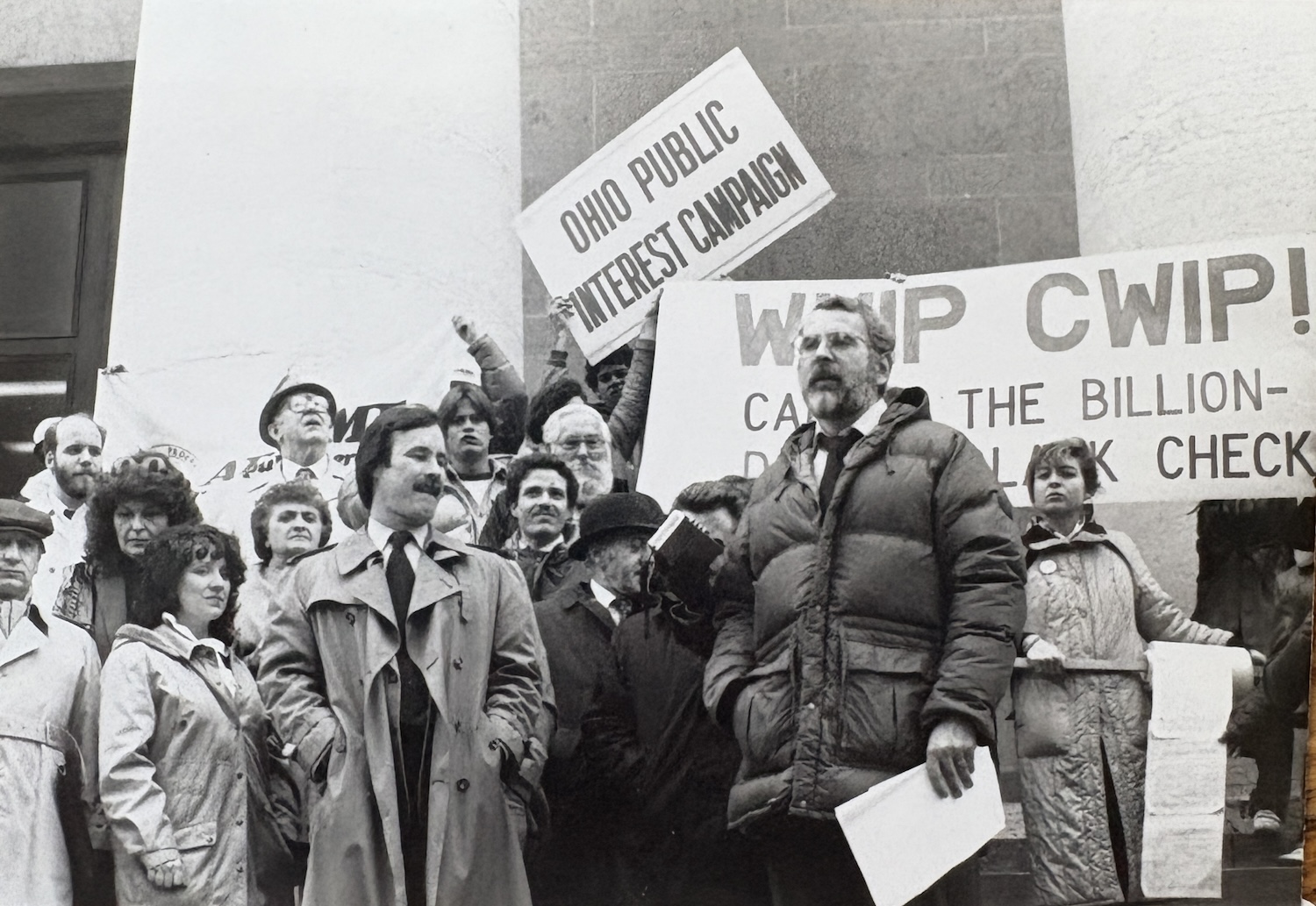
“Construction Work in Progress” Victory in 1985

``Whip CWIP``
In the early 1980s, Ohio utilities – particularly those building nuclear power plants like Perry and Zimmer – were attempting to charge customers for “construction work in progress” (CWIP). This practice would have allowed utilities to pass costs for ongoing plant construction directly to ratepayers immediately, rather than waiting until the plants were operational. It was essentially asking customers to pay for infrastructure before it was completed or available for use.

Starting in 1983, Citizen Action organized a campaign against these CWIP rate hikes. The organization mobilized grassroots opposition to this utility practice, recognizing it as an unfair charge on consumers.

In 1985, Citizen Action’s efforts successfully culminated in a new state law that severely restricted “construction work in progress” payments. This represented a major consumer protection victory, preventing utilities from shifting construction costs directly onto ratepayer bills and establishing important guardrails around utility rate practices.

This victory was part of a remarkable streak of consumer wins by Citizen Action during the mid-1980s, including a major settlement with Columbia Gas that same year (saving Ohio gas customers $300 million), and earlier victories against nuclear plant cost overcharges.

The 1985 CWIP law victory demonstrated Citizen Action’s effectiveness at translating grassroots organizing into meaningful legislative reform that protected ordinary consumers from utility cost-shifting schemes.
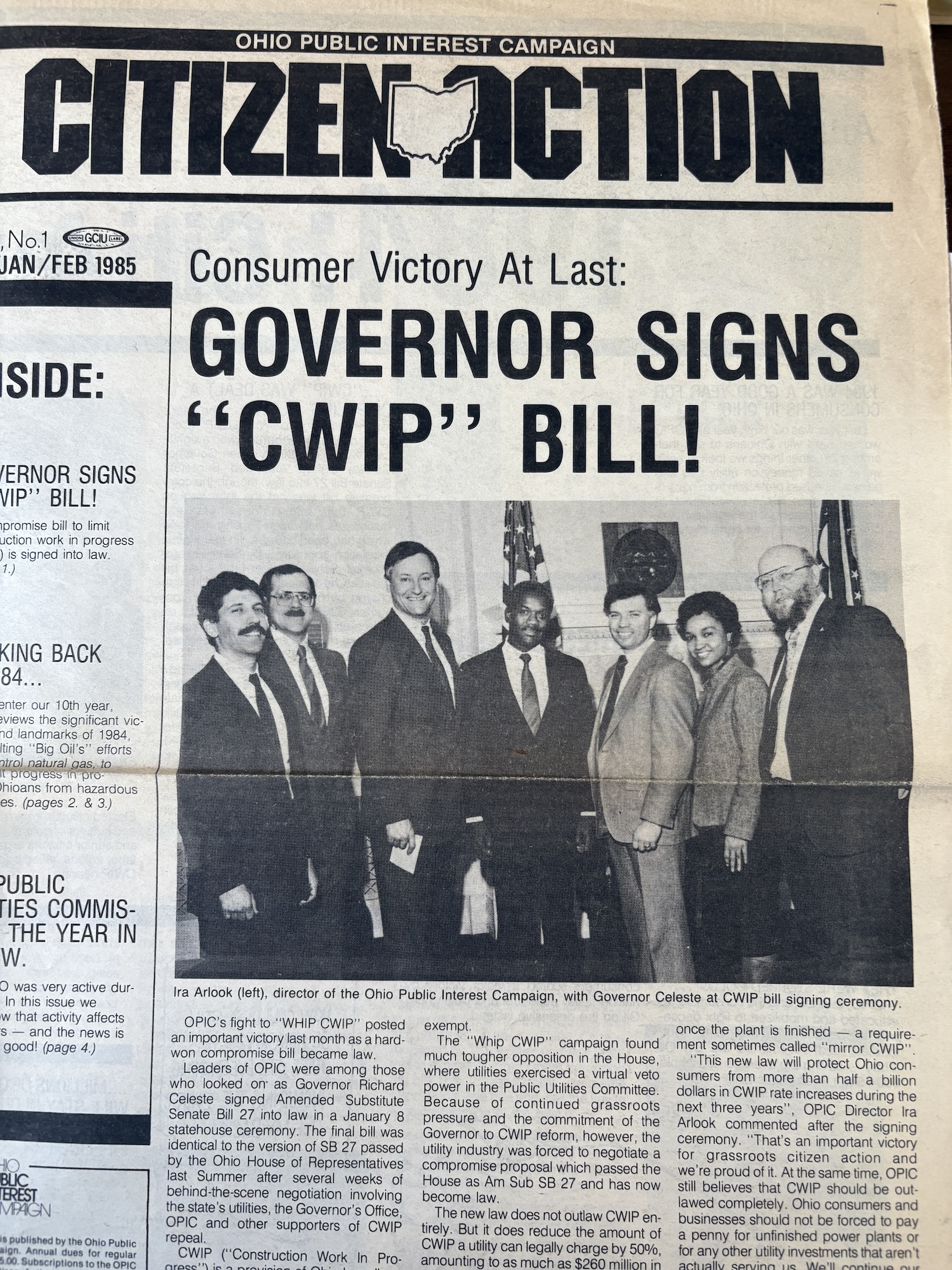
“Construction Work in Progress” Victory in 1985

``Whip CWIP``
In the early 1980s, Ohio utilities – particularly those building nuclear power plants like Perry and Zimmer – were attempting to charge customers for “construction work in progress” (CWIP). This practice would have allowed utilities to pass costs for ongoing plant construction directly to ratepayers immediately, rather than waiting until the plants were operational. It was essentially asking customers to pay for infrastructure before it was completed or available for use.

Starting in 1983, Citizen Action organized a campaign against these CWIP rate hikes. The organization mobilized grassroots opposition to this utility practice, recognizing it as an unfair charge on consumers.

In 1985, Citizen Action’s efforts successfully culminated in a new state law that severely restricted “construction work in progress” payments. This represented a major consumer protection victory, preventing utilities from shifting construction costs directly onto ratepayer bills and establishing important guardrails around utility rate practices.

This victory was part of a remarkable streak of consumer wins by Citizen Action during the mid-1980s, including a major settlement with Columbia Gas that same year (saving Ohio gas customers $300 million), and earlier victories against nuclear plant cost overcharges.

The 1985 CWIP law victory demonstrated Citizen Action’s effectiveness at translating grassroots organizing into meaningful legislative reform that protected ordinary consumers from utility cost-shifting schemes.