No Ban on Property Rights in Richland County

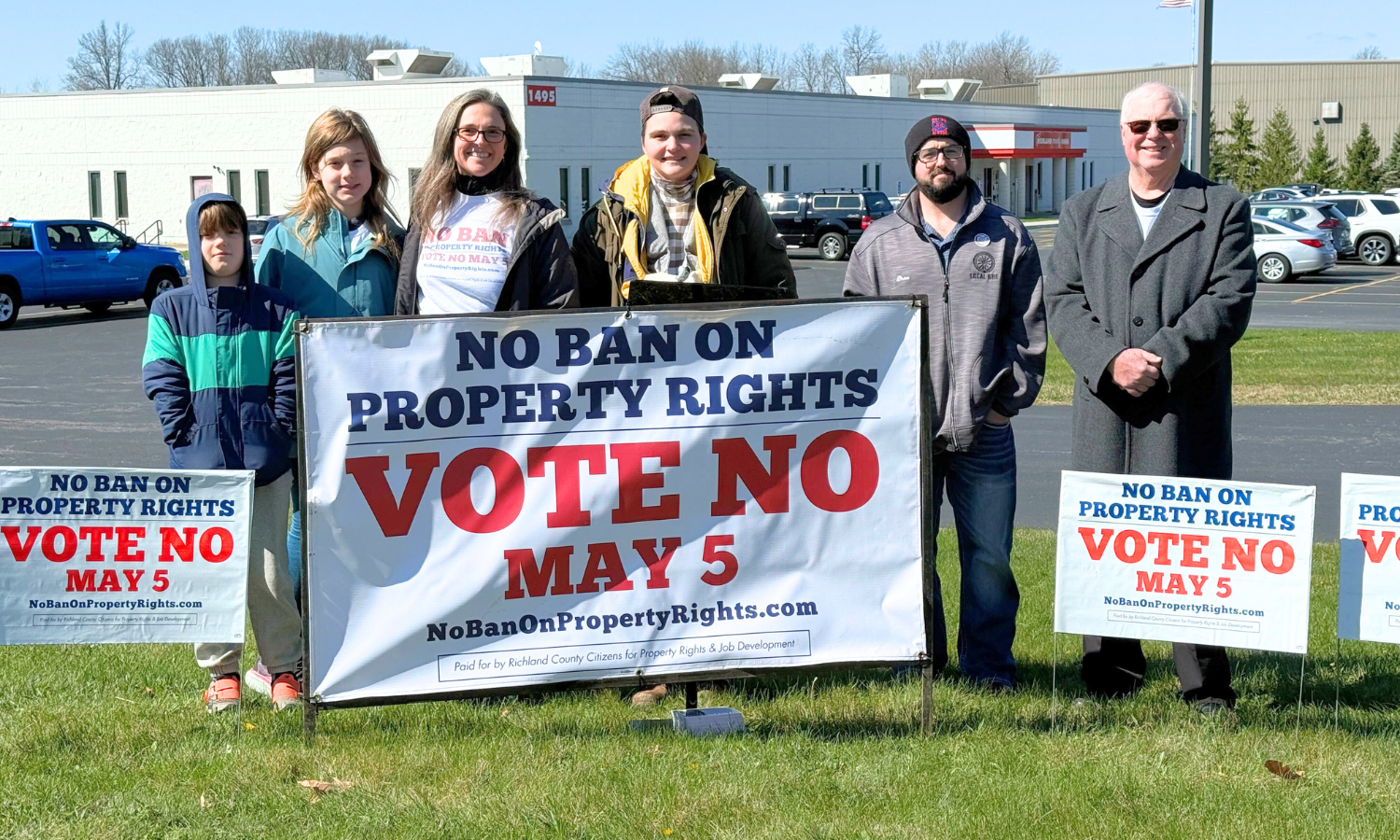
Richland was the first county in the country to put an issue on the ballot with a citizen-led initiative to oppose a wind and solar ban.
When Richland County Commissioners passed a solar ban in July 2025, concerned local citizens asked “what can we do?” Senate Bill 52, the Ohio law that gives local governments the authority to create solar bans, provides a straightforward answer: you can collect petition signatures from at least 8% of the number of voters who voted in the last governor’s election in the next 30 days. Then it’ll be on the ballot for the county’s voters to decide.

A local group led the charge as the No Ban on Property Rights campaign got to work. The campaign fought to protect property rights, stop government overreach, and preserve the voice of citizens across the county.

Ohio Citizen Action supported signature collection to get this issue on the May 5th ballot. We spoke with thousands of Richland County voters who opposed the County Commissioners’ resolution banning farmers and landowners from leasing their land for large-scale solar and wind energy projects in 11 of 18 townships. Voters wanted their voices heard. We continued to support this citizen-led campaign to protect property rights, preserve economic opportunities, and restore local control over land use decisions throughout the campaign and election process.

Richland County's solar ban had a fossil fuel lobby behind it. Canary Media found the receipts.
Reporting confirmed what we were up against: Canary Media investigated the campaign bankrolling the solar ban and found its money led back to fossil fuel interests.

Richland was the first county in the country to put an issue on the ballot with a citizen-led initiative to oppose a wind and solar ban. On election day, the ban was upheld by 1,336 votes – significantly less than if the vote had been a partisan issue. 


Ohio Citizen action was proud to stand with the dedicated residents of Richland County in this fight for property rights and government accountability. The election results did not change that. Despite losing the election, over 10,000 Richland County residents voted NO to reject a ban on large solar and wind in 11 of 18 of the county’s townships.

The fossil fuel playbook, exposed.
Following the playbook of other Ohio elected officials, Richland County Commissioner Darell Banks coordinated the large solar and wind ban in Richland County with natural gas lobbyist Tom Whatman. Evidence emerged just one day before the election, confirming the role of fossil fuel industry operatives pushing this ban, and knowing about it months before local residents.


The No Ban campaign also inspired other counties in Ohio, like Portage County, to warn their county commissioners that if they passed a wind and solar ban, they would take it to the ballot. Portage County heard this warning, and passed a resolution to continue to consider large-scale solar projects on a case-by-case basis.


Our mission is to educate, inform, and mobilize on issues of consumer rights, government accountability, and environmental policy. We do this across the state, whether in a city or rural areas. We are proud to stand with the local community members who are standing up for their community.

No Ban on Property Rights in Richland County

Richland was the first county in the country to put an issue on the ballot with a citizen-led initiative to oppose a wind and solar ban.
When Richland County Commissioners passed a solar ban in July 2025, concerned local citizens asked “what can we do?” Senate Bill 52, the Ohio law that gives local governments the authority to create solar bans, provides a straightforward answer: you can collect petition signatures from at least 8% of the number of voters who voted in the last governor’s election in the next 30 days. Then it’ll be on the ballot for the county’s voters to decide.

A local group led the charge as the No Ban on Property Rights campaign got to work. The campaign fought to protect property rights, stop government overreach, and preserve the voice of citizens across the county.

Ohio Citizen Action supported signature collection to get this issue on the May 5th ballot. We spoke with thousands of Richland County voters who opposed the County Commissioners’ resolution banning farmers and landowners from leasing their land for large-scale solar and wind energy projects in 11 of 18 townships. Voters wanted their voices heard. We continued to support this citizen-led campaign to protect property rights, preserve economic opportunities, and restore local control over land use decisions throughout the campaign and election process.

Richland County's solar ban had a fossil fuel lobby behind it. Canary Media found the receipts.
Reporting confirmed what we were up against: Canary Media investigated the campaign bankrolling the solar ban and found its money led back to fossil fuel interests.

Richland was the first county in the country to put an issue on the ballot with a citizen-led initiative to oppose a wind and solar ban. On election day, the ban was upheld by 1,336 votes – significantly less than if the vote had been a partisan issue. 


Ohio Citizen action was proud to stand with the dedicated residents of Richland County in this fight for property rights and government accountability. The election results did not change that. Despite losing the election, over 10,000 Richland County residents voted NO to reject a ban on large solar and wind in 11 of 18 of the county’s townships.

The fossil fuel playbook, exposed.
Following the playbook of other Ohio elected officials, Richland County Commissioner Darell Banks coordinated the large solar and wind ban in Richland County with natural gas lobbyist Tom Whatman. Evidence emerged just one day before the election, confirming the role of fossil fuel industry operatives pushing this ban, and knowing about it months before local residents.


The No Ban campaign also inspired other counties in Ohio, like Portage County, to warn their county commissioners that if they passed a wind and solar ban, they would take it to the ballot. Portage County heard this warning, and passed a resolution to continue to consider large-scale solar projects on a case-by-case basis.


Our mission is to educate, inform, and mobilize on issues of consumer rights, government accountability, and environmental policy. We do this across the state, whether in a city or rural areas. We are proud to stand with the local community members who are standing up for their community.