
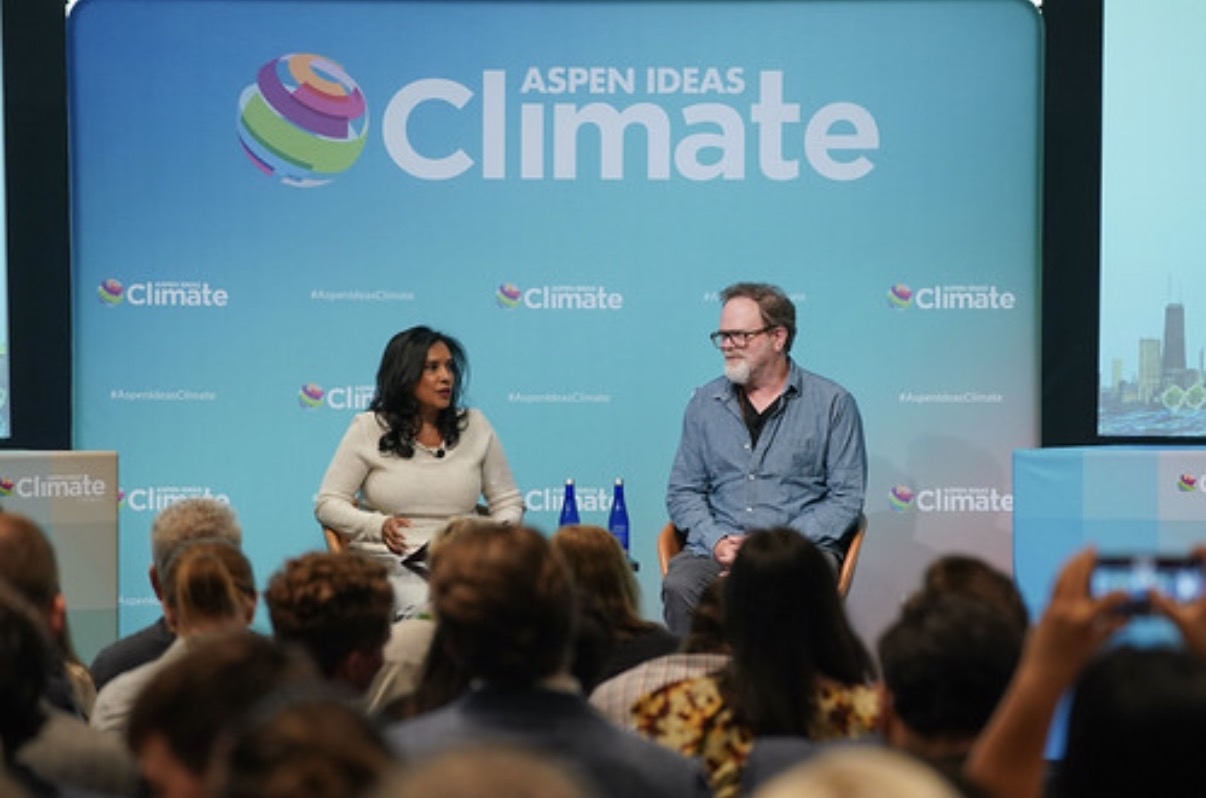
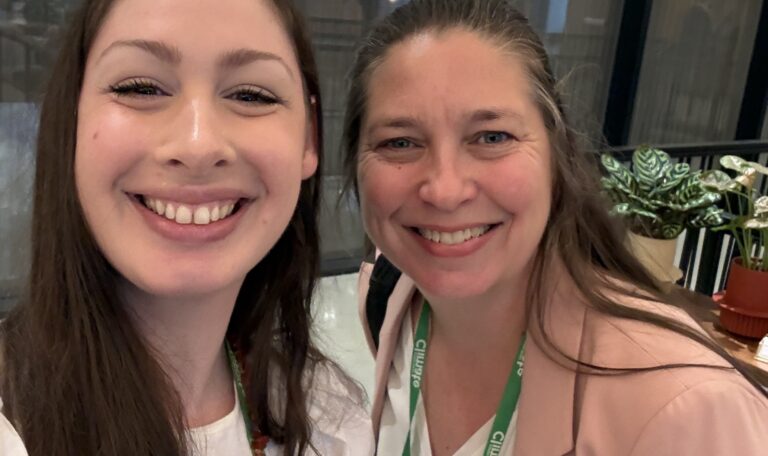
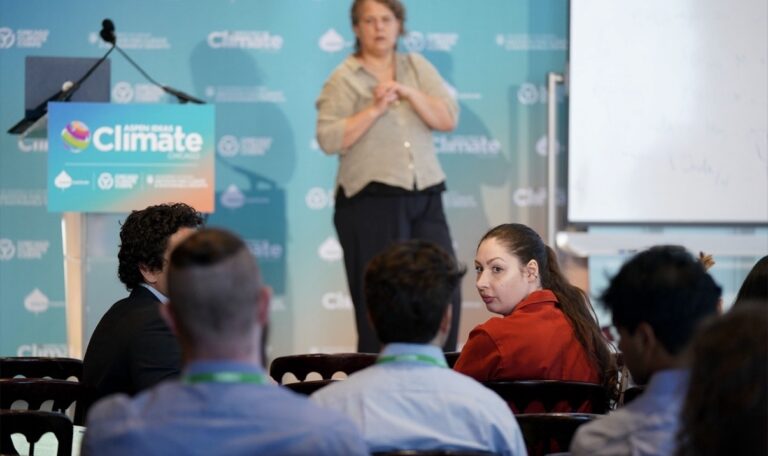
Last week, I had the opportunity to attend Aspen Ideas: Climate during Chicago Climate Week, where leaders from science, business, government, philanthropy, and advocacy came together to discuss one of the defining challenges of our time. Over three days, I listened to conversations that ranged from clean energy and technological innovation to climate resilience, agriculture, finance, and the communities already feeling the effects of a changing climate.
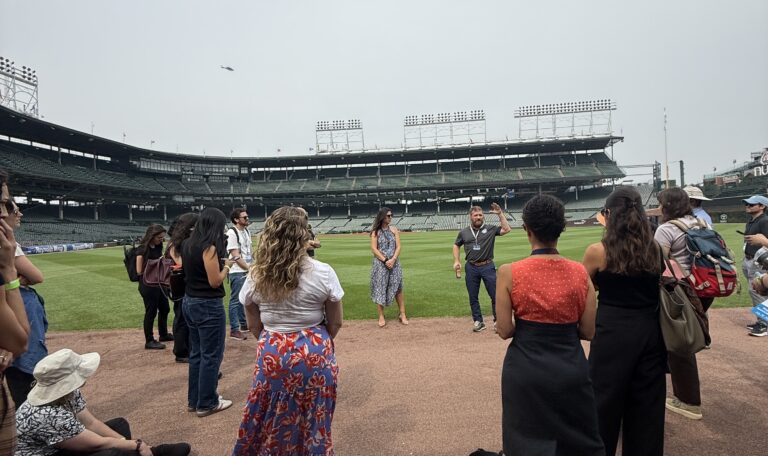
One of the highlights of the week was an excursion to Wrigley Field. While most people know it as one of America’s most iconic ballparks, I got to see another side of it. The Chicago Cubs have transformed the historic stadium into a model of sustainability through the 1060 Project, modernizing the ballpark while preserving its history. We even walked the warning track and learned about the many sustainability measures integrated throughout the facility. My favorite detail was discovering that Wrigley Field has two beehives on the property, and the honey they produce is served in the clubhouse. It was such a simple but powerful reminder that even small, thoughtful decisions can become part of a much larger commitment to environmental stewardship.
As someone who works every day to advance renewable energy in rural Ohio, it was inspiring to hear from experts tackling climate challenges from every angle. The conversations reinforced that solving the climate crisis isn’t about a single breakthrough or one organization. It requires collaboration across industries, communities, and disciplines, with each playing an important role.

One message echoed throughout nearly every session: the climate crisis is no longer a distant possibility. We are living through it today. The conversation has shifted from preventing every impact to building resilience, adapting intelligently, and creating solutions that help communities thrive despite the challenges ahead.
While that reality can feel overwhelming, I left Chicago feeling more hopeful than discouraged. I had the privilege of hearing from some of the brightest scientists, engineers, entrepreneurs, policymakers, and advocates in the world. They are developing new technologies, improving existing systems, and finding innovative ways to help communities adapt and prosper in a changing climate.
The road ahead will not be easy, but after spending three days surrounded by people dedicating their lives to solving these problems, I came away with a renewed sense of optimism. There are incredibly brilliant people working every day to build a more resilient future, and we are truly in very capable hands.