
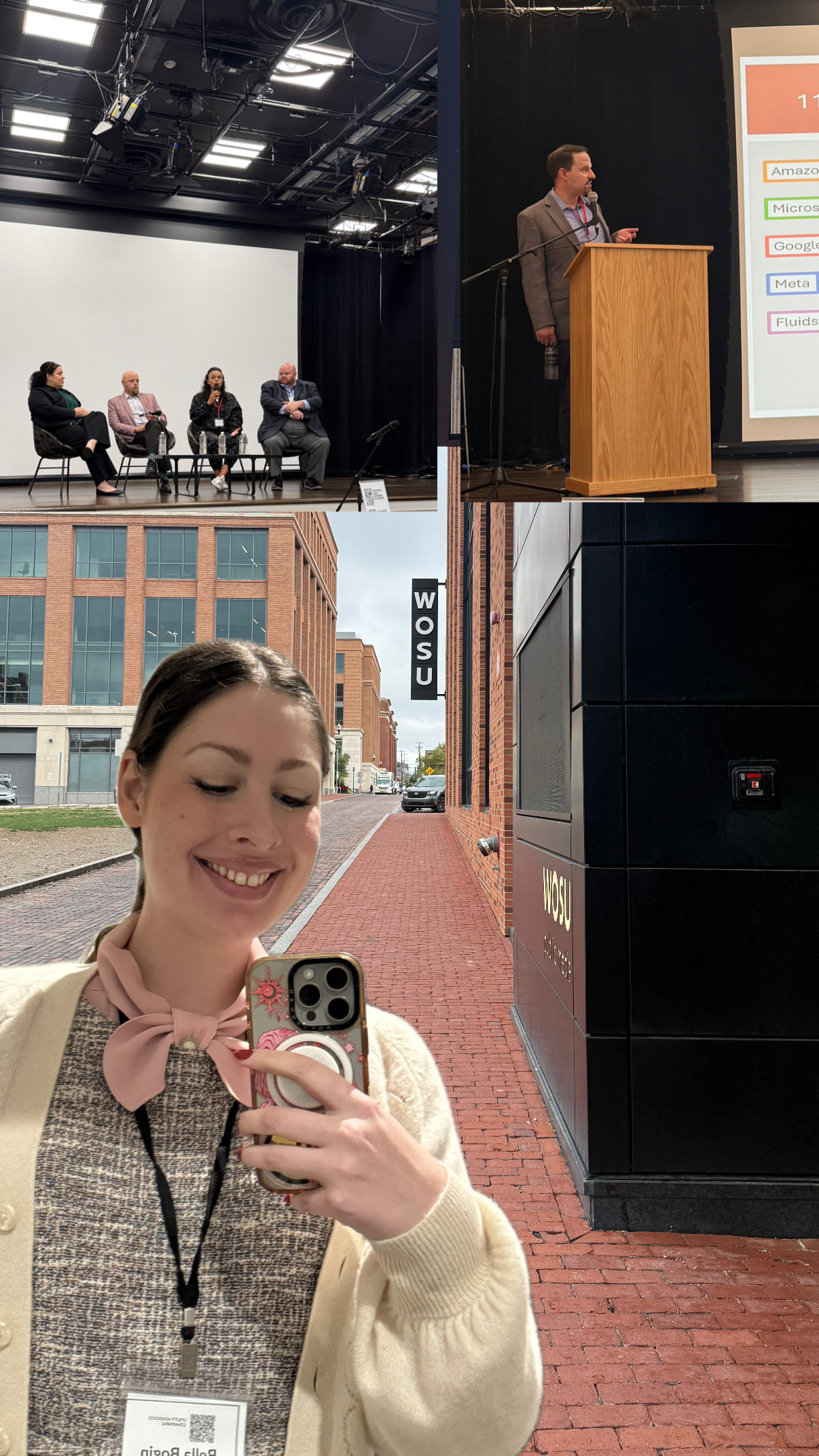
On September 24, I had the opportunity to join advocates, attorneys, policy experts, and community leaders at the Ohio Environmental Council’s Utility Advocate Conference at The Ohio State University. The day focused on an area of energy policy that can feel incredibly technical but affects every Ohioan: how utilities are regulated, how decisions about our electric grid are made, and ultimately, who pays for them. Sessions covered everything from utility ratemaking and return on equity to energy data, cost allocation, and the challenges created by rapidly growing electricity demand.
One of my biggest takeaways was how much power is hidden inside decisions that most people will never hear about. How regulators determine a utility’s return on equity can influence what utilities choose to invest in. How costs are allocated among residential, commercial, and industrial customers determines who shoulders the burden of those investments. And whether advocates and the public can access meaningful utility data affects our ability to identify inequities and hold decision-makers accountable. These may sound like technical regulatory questions, but their consequences show up somewhere very familiar: our electric bills.
Those questions are becoming even more urgent as Ohio’s energy needs change. The convening examined how utilities forecast future electricity demand, including the enormous new loads associated with data centers, and how inaccurate forecasts or poorly designed cost allocation can shift expenses onto consumers. We also heard about the different ways advocates can participate in utility proceedings, from formal intervention and settlement to public hearings, where everyday Ohioans can help build the public record.
For me, the convening reinforced why Ohio Citizen Action’s work must connect the complicated world of energy policy with the people who ultimately live with its consequences. A cleaner and more reliable grid matters, but so does affordability, transparency, and ensuring that Ohio families are not asked to unfairly subsidize the demands of powerful interests.
As Ohio makes decisions that will shape our electric system for decades, advocates have an important role to play in asking a simple question behind all the technical language: Who benefits, who pays, and do Ohioans have a meaningful voice in the answer?